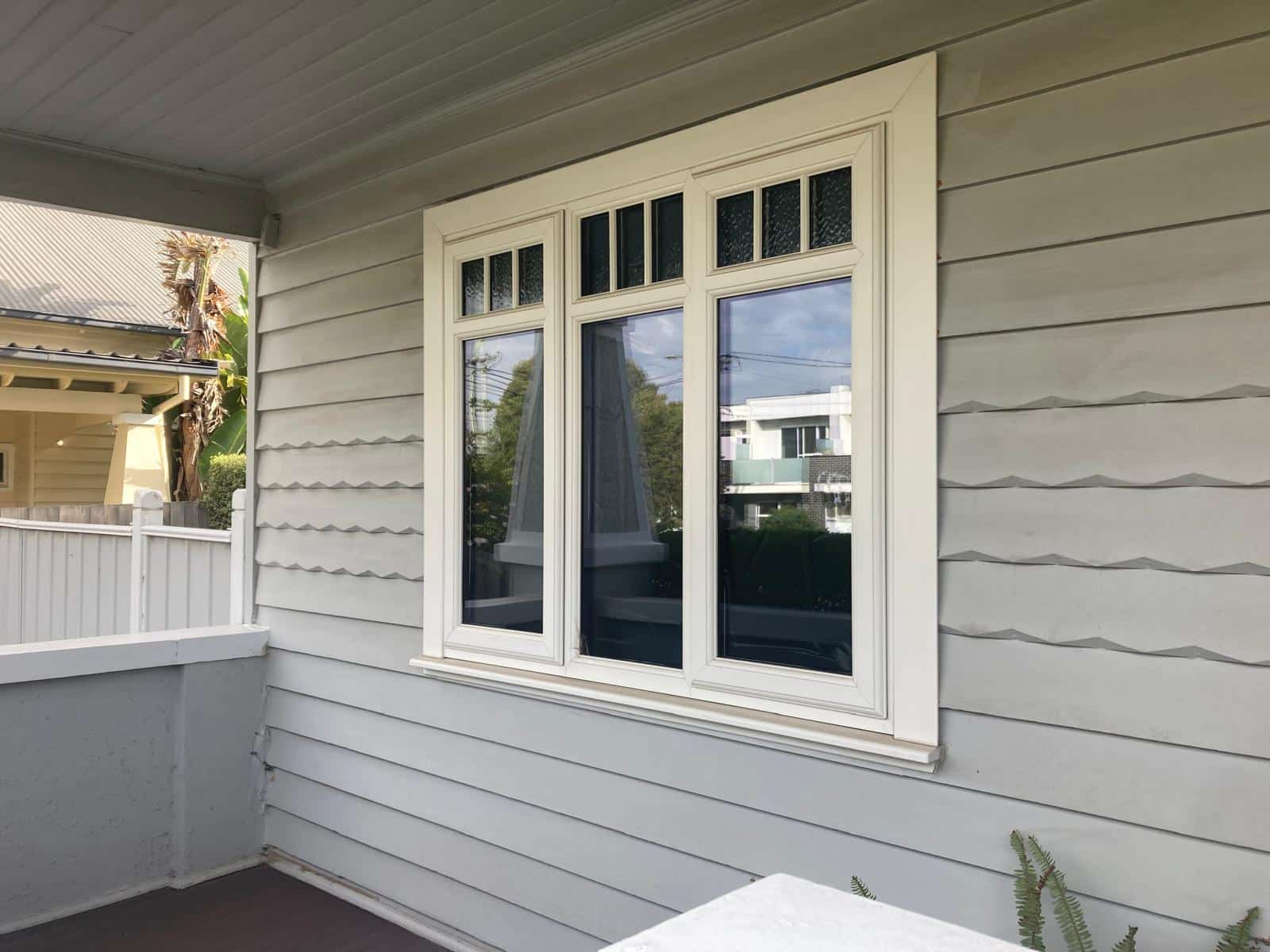
Yes, and it addresses all three problems because they share the same root cause: poorly performing windows.
Condensation forms when warm, moist indoor air hits a cold surface. With single glazed windows, the glass gets cold enough to trigger moisture buildup, which feeds mould growth on frames, sills, and surrounding walls. Double glazing keeps the inner pane much closer to room temperature, so the glass rarely drops below the dew point. The result is dramatically less moisture on the glass and far less risk of mould developing around the window.
Draughts are a separate issue but equally common in older Melbourne homes. They happen when gaps open up in ageing frames, whether from timber shrinking, mechanical joins loosening, or seals deteriorating. Fully welded uPVC frames have no mechanical joints and no timber to warp, so there are simply no gaps for cold air to find its way through. If your current windows are foggy, damp, or letting cold air pour in on winter mornings, replacing them is one of the most effective single upgrades you can make to your home’s comfort.